
Custom Joinery in Dubai: Better Wardrobes, Kitchens and Everyday Storage
Made-to-measure cabinetry is only useful when the inside works as well as the outside looks. Plan custom joinery around what you store, how you move and the details you use every day.
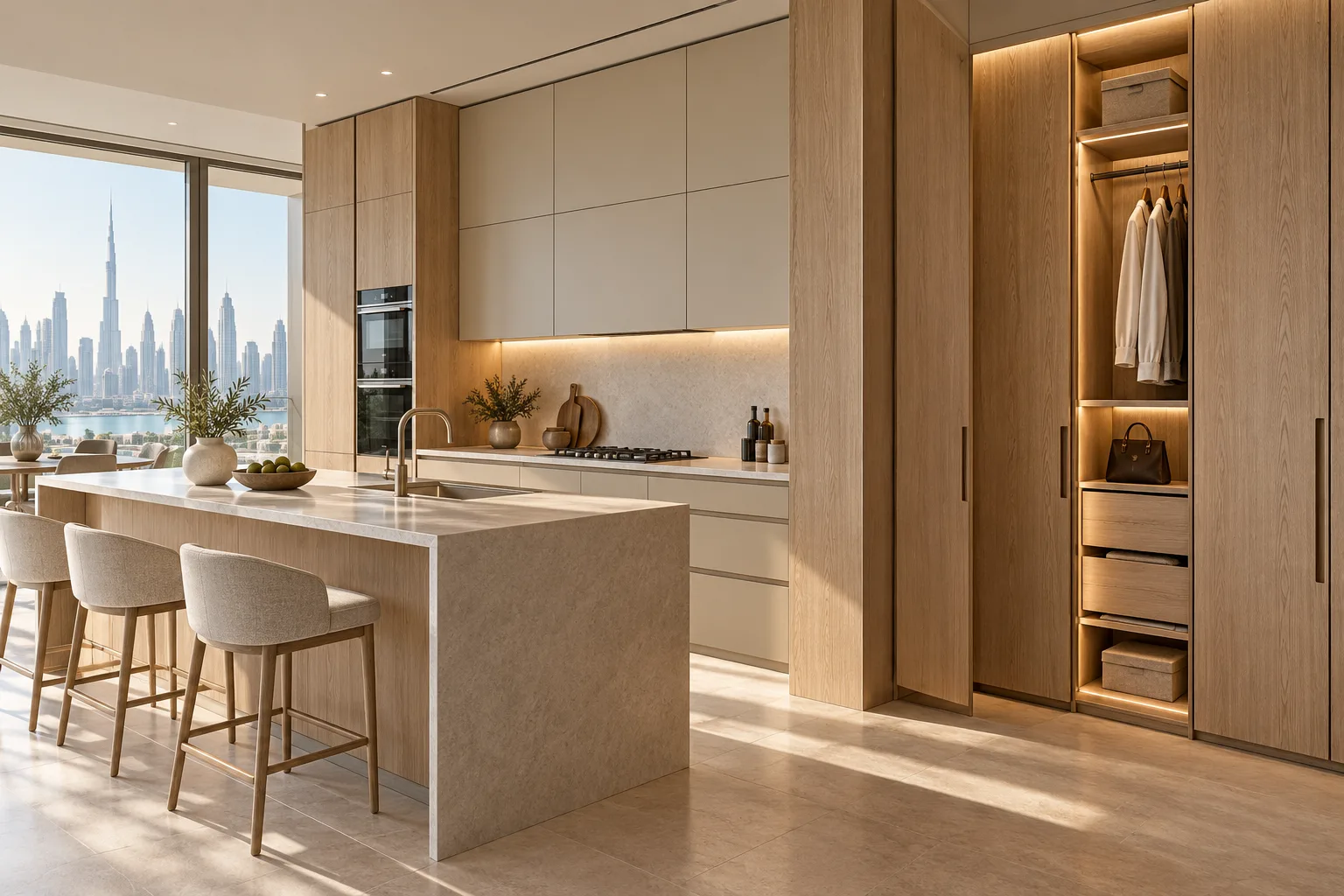
A full-height wardrobe can look generous on a drawing and still leave you balancing suitcases above your clothes. A kitchen can have plenty of cupboards and nowhere convenient for the mixer you use every morning.
Good custom joinery starts with these small frustrations. For homes in Dubai and across the UAE, the aim is to use the available space thoughtfully while choosing materials and details suited to their actual location.
Begin with a storage inventory, not a door style
Before selecting a finish, write down what each piece needs to hold. Measure the awkward items: a vacuum cleaner, ironing board, large serving platters, long clothing and travel bags. A few real measurements are more useful than a vague request for extra storage.
Think about who uses the space and how often. Frequently used items should be easy to reach; seasonal items can sit further away. If several family members share a wardrobe or kitchen, give each routine a clear place rather than designing around an idealised photograph.
For wardrobes
- Balance hanging space, shelves and drawers around the clothes you actually own.
- Allow practical space for longer garments, including abayas and kanduras where needed.
- Decide where accessories, shoes and folded items belong before finalising the internal divisions.
- Check that doors and drawers can open around the bed and other furniture.
For kitchens
- Keep everyday preparation tools close to the surface where you use them.
- Plan tall-item storage and access to deep or corner units.
- Confirm the appliance models and their installation information before cabinet fabrication.
- Reserve accessible space for the waste system and cleaning supplies.
Use the room's constraints as design information
Built-in joinery can make useful space out of an awkward recess or a narrow hallway. It also needs to respect the building. Ask for a measured drawing showing skirting, ceiling details, sockets, existing services and the clearances needed around doors.
In a Dubai apartment, delivery access deserves an early check. Large panels and assembled units may need a different installation plan from smaller components. In a villa, look just as carefully at stairs, doorways and the route into the room.
Do not cover equipment access panels or ventilation openings with a beautiful but inaccessible cabinet. Discuss access and maintenance with the relevant trades before the final layout is approved.
Ask what is behind the visible finish
A description such as wood finish or premium board does not tell you enough to compare proposals. Ask for the panel type, product specification, surface finish, edge treatment and the areas where each will be used.
Moisture performance should be considered by location. For example, MEDITE distinguishes its moisture-resistant interior MDF from exterior grades. That distinction is a reason to check the selected manufacturer's guidance; the words moisture resistant should not be treated as permission to use any board in any wet location.
For a sink cabinet, discuss protection around cut-outs and connections, and how a leak could be noticed and reached. For wardrobes, ask about the wall condition and ventilation of the intended space before installation. The correct specification depends on the actual exposure and product, rather than a single material being best for every UAE home.
Try the hardware before committing
Open a sample drawer and operate the hinge or lift mechanism you are being offered. Check whether it works comfortably for the people who will use it. Soft closing is useful, but it is only one part of how a cabinet feels and performs.
Ask the joinery team to specify the hardware and its suitability for the proposed door sizes, drawer contents and loading. Make sure replacement parts and the warranty arrangements are clear. Do not approve a tall, heavy door simply because a small showroom sample felt light.
Review samples in the room
Take finish samples into the actual space where possible. Daylight, room lighting, nearby stone and flooring can change how a colour reads. Compare the proposed door finish with the edge and handle details, not just the large surface.
Consider cleaning as part of the choice. Ask for care instructions and decide whether the finish suits the level of use. A surface selected for a quiet display niche may not be your preferred choice for a busy family kitchen.
Approve the details that affect daily use
Review an itemised drawing before fabrication. It should make the agreed layout, dimensions, door openings and internal arrangement understandable. Check which dimensions depend on finished floors or walls and when final site measurements will be taken.
- Are the handles comfortable and positioned consistently?
- Can drawers open without hitting adjacent doors or appliances?
- Can the specified appliance be installed, ventilated and serviced?
- Are lighting, switches and cable routes coordinated before the panels are made?
- Does the proposal identify what is included in delivery, installation and making good?
Agree how changes after approval will be handled. A signed drawing is useful only if everyone understands what it represents.
Inspect function as well as appearance at handover
Check doors, drawers, shelves and fitted accessories with the installer. Look at alignment and edge finishes, then test the parts you will touch every day. Record any adjustments on a clear snagging list and ask for the relevant cleaning and hardware-care information.
Custom cabinetry should earn its place by making the room easier to use. Better storage is not necessarily more cupboards; sometimes it is one well-planned unit that removes several everyday problems.
Plan your joinery as part of the wider interior
BOLD Fitout's custom joinery and carpentry, kitchen and bathroom fit-out and lighting design and installation connect storage with the surrounding interior.
For a custom joinery project in Dubai, send your requirements with room photographs, approximate dimensions and a list of what the furniture needs to hold. A thoughtful brief makes it easier to design something personal and genuinely practical.
